
 Concrete Calculator | Solve Your Estimation Problems And Work out the amount of concrete you need.
6 Mistakes To Avoid When Laying Concrete
Call for today’s best price on: 0808 196 7812
When correctly laid, concrete is one of the strongest, most reliable, versatile and durable construction materials on the planet.
But, concrete laying is a fine art. It’s a meticulous process, which requires a lot of care and precision. Any mistakes, and you risk compromising the strength, finish and lifespan of your concrete.
Thankfully, when you work with a concrete specialist like iMix Concrete, your team of experts will have the skills, equipment and experience necessary to achieve a flawless finish.
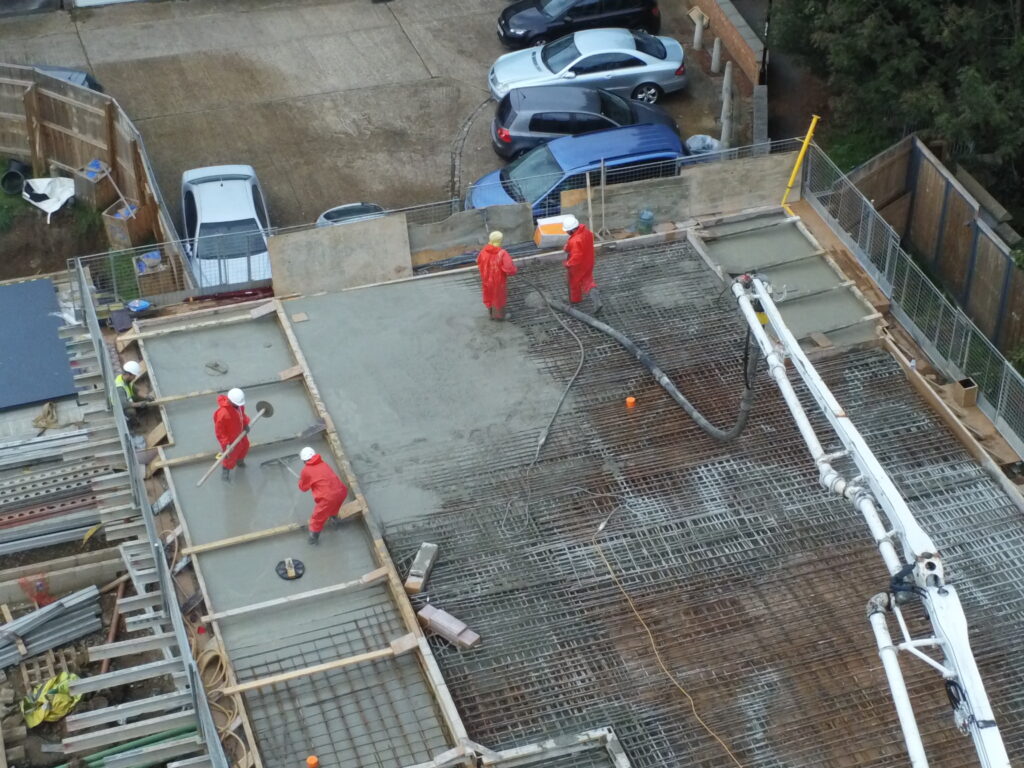
If you’re planning an upcoming project, to give you a sense of concrete laying and its hurdles, we’ve shared the top 6 mistakes that people make when laying concrete.
Keep reading to learn more about these most common mistakes, and how you can avoid them!
1. The site is not ready
Site preparation is often the make or break of concrete structures.
Without correct and thorough site preparation, the site may not be sufficiently compacted, it may be uneven, the gravel may be too small or fine, and if organic material has not been removed, then it can cause the concrete to crack.
When you work with a specialist concrete supplier and installer, they will correctly clear and excavate, ensuring all organic material is removed, before installing an even sub-base layer.
2. Wrong measurements
If you don’t have enough concrete, then you won’t be able to finish the project.
If you’ve partially poured some concrete into the structure (only to find that you haven’t got enough) you’ll have to scrap it and start all over again.
To mitigate this risk, at iMix Concrete, we offer a handy concrete calculator on our website. This tool enables you to calculate the exact amount of concrete that you’ll need for your project.
So, there’s no risk of you running out of concrete. Plus, it also helps to avoid over-ordering, thereby keeping costs down, and minimising project waste.
3. Wrong strength or grade
If the concrete’s components are not correctly measured, and therefore don’t achieve the correct grade, then the concrete will not be usable.
Equally, if you choose concrete of an incorrect strength or grade, then it will be completely ill-suited to your project, and therefore also can’t be used.
This is because concrete grades and strengths determine what projects they can be used for. If the strength is not sufficient, or the concrete is missing key qualities, then the project will not be safe or durable enough, and you won’t achieve the required finish.
You can avoid this issue occurring by using a trusted, professional ready mix concrete supplier, like iMix Concrete. They will provide you with detailed, dependable advice about concrete grades and types, and ensure you choose the best concrete for your specific project.
4. Bad weather
When it is being laid, concrete is extremely sensitive to weather conditions. If the weather is too hot, then this can cause the concrete to cure too quickly, which results in cracks.
If it is too cold, then the concrete could freeze while curing, which compromises its strength. Or, if it rains and rain gets onto the concrete while it is curing, then the concrete may be ruined.
To avoid these risks, you will need to ensure the concrete is correctly covered while it is curing (to protect it from the rain).
By working with a professional concrete supplier, you can get an expert’s opinion on the weather forecast, any upcoming weather risks, and whether or not the conditions are right for concrete laying.
5. Not enough time to set or cure
A very common mistake that people make when laying concrete is assuming that, when the concrete is dry, it is ready to move on to the next step.
In reality, being dry to the touch isn’t enough. Concrete actually also needs additional time to cure, as this is the period where it strengthens. In fact, if insufficient time is given to concrete curing, then the concrete can be as much as 50% less durable.
You can avoid this by keeping the concrete damp for a minimum of 7 days whilst it is drying, to promote the curing process, and stop it drying out too quickly.
Alternatively, by enlisting a concrete specialist, they will ensure all of these processes are completed correctly and in full, to achieve maximum-strength concrete.
6. Uneven ground
This is another key preparation point. If you lay concrete on uneven ground, then this can lead to cracking, sinking, bowing or crumbling concrete. It can also result in poor drainage, leading to flooding or mould development later down the line.
So, it is essential that you correctly level the ground, before you start pouring the concrete.
With extensive experience and the right equipment, a professional concrete installer will be able to perfectly level the surface, completely mitigating this common risk.
Order your Concrete Now
At iMix Concrete, we are fully accredited, specialist concrete suppliers. With a skilled team and extensive experience, you can trust our team to achieve the very highest quality standards for your project.
To find out more about our services, or to enlist our team’s assistance, don’t hesitate to get in touch and place your order today.
 Independent Supplier