
 Concrete Calculator | Solve Your Estimation Problems And Work out the amount of concrete you need.
Types of Concrete Floor Slabs
Here at iMix Concrete we pride ourselves in providing quality mixed concrete, using prime and aggregate materials.
We provide a vast array of concrete services: commercial and domestic concrete, concrete floors, concrete for builders and construction, high strength concrete, mini mix concrete, and lots more of other concrete types.
An area in which we get a lot of questions asked is about the different types of concrete slabs. What exactly is a concrete slab, why is it so important and what are the different types? Read on to find out.
What is a Concrete Slab?
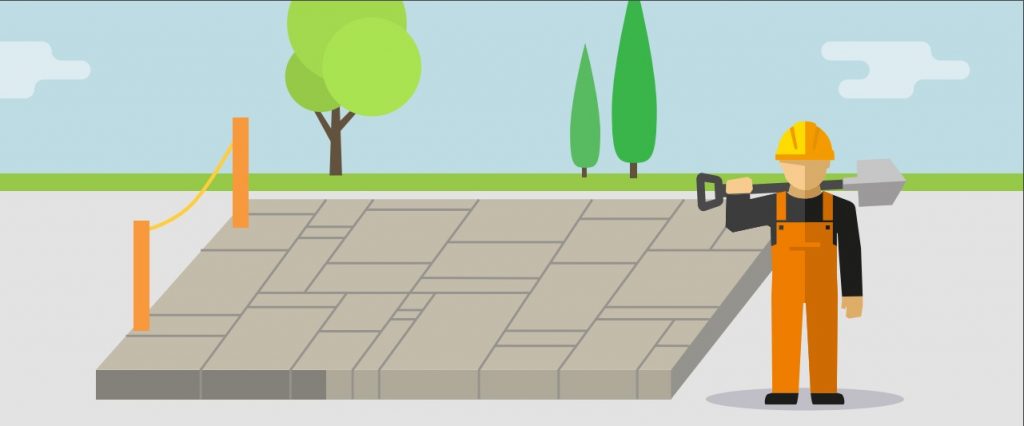
A concrete slab is a two-dimensional, flat, uniform foundation. It is used on level ground and made of sturdy concrete. This sturdy concrete is a composite slab material, made up of cement, water and aggregate (gravel, sand or rock).
Concrete slabs boast a number of different benefits for both domestic and industrial buildings. They serve as strong, rigid structures with large spans. Concrete slabs are fire and heat resistant, promote acoustic benefits, enjoy a lack of maintenance and have a long life-span.
Why is it important to choose the right type of concrete floor slab?
Choosing the right type of concrete floor slab may not be something that immediately comes to mind when planning your project but actually, they are an extremely important component in any building structure.
Concrete slabs are key structural components of buildings
They can support the building and connect with walls, beams, columns and foundations. Concrete slabs provide a flat surface and help the walls, beams, columns and foundations support the load. Concrete slabs are an essential element to stabilise any building and if your concrete slabs have defects, they can cause serious structural problems.
The conditions and stipulations of your building may vary
When considering the type of concrete floor slab you want to use and/or the type of flooring you want to lay on top of it, you must take into account the condition and stipulation of your building. Whatever construction projection you’re working on, whether it’s a small home project or a large industrial project, the concrete floor slab you chose has a significant influence on the type of flooring material you lay on top of it.
Fitting with the type of building, architecture, aesthetic features and span length is key
When deciding on a concrete floor slab, you will want it to look good, be effective and have attractive features.
Every building project involves choosing the most appropriate and cost-effective materials
There are many factors that come into play when designing and erecting a building project. At the end of the day, everyone wants to save time and money both in the immediate future and long-term, so spending time choosing the best concrete floor slab for you is vital.
Of course, other materials can be used to build foundations
But certain types of concrete floor slabs are the most popular due to their strength and lack of maintenance needed. So without further ado, let’s go through the main types of concrete floor slabs that we used at iMix Concrete. If you have any further questions about any of the types of floor slabs that we use, get in touch and we’d be more than happy to talk through your requirements in more detail.
What is a Flat Slab / Beamless Slab?
The flat slab is probably the slab that most people think about when they think of concrete floor slabs as a structural element. The flat slab is a reinforced concrete slab supported directly on columns or caps, without the use of beams – another name for the flat slab is beamless slab.
Flat concrete floor slabs are often seen as a safer option than traditional beam slabs in construction as they are less vulnerable in the case of a fire. Flat slabs are very versatile, provide variable depths and can be constructed quickly. Flat slabs are suitable for most flooring and irregular column layouts.
What are Waffle Slabs / Grid Slabs?
Waffle slabs are used as both floor and ceiling concrete slabs. They are also known as grid slabs, used to reinforce concrete slabs containing square grids with deep sides. Waffle slabs are light in weight so can carry bigger loads for longer distances than flat slabs, they are generally used when there is a restriction on beam depth as you can achieve a clear height with them.
Waffle slabs are perfect to be used at the entrance of shopping centres, hotels and restaurants. They look good and are a great place to install artificial lighting on.
What is a Hollow Core Ribbed Slab?
If sustainability is important to you, hollow core slabs are a brilliant option. Hollow core ribbed slabs enable you to use a smaller volume of material as the slabs have voids, or cores, running through the units. These cores act as service ducts; they reduce the self-weight of the slabs and maximise structural efficiency.
These concrete slabs are reinforced with diameter steel strands that run longitudinally to increase the strength of the slab. With these concrete floor slabs, there is no need to drill in them for electrical and plumbing units and their thickness is ideal for fire resistance and sound insulation. Hollow core ribbed slabs are quick to construct and perfect for offices, retail and car park developments.
What is a Sunken Slab?
Sunken, or sunk, slabs are generally used below washrooms, bathrooms, and laundry areas to hide sewerage pipes or other fixtures. They enable water to pass through pipes that are under the slabs. Extra care is required to construct the sunken types of concrete floor slabs to prevent future dampness or water leakages. Trained experts will need to consider the maintenance and future visions of the area before constructing and installing sunken slabs.
What is Slab on Grade / Slab on Ground?
Slab on grade, or slab on ground, is casted on the surface of the earth. This type of concrete floor slab is used for basement floors or at plinth level in both domestic and commercial buildings. Ground slabs are supported on foundations or directly on the subsoil for the ground floor. With this type of concrete floor slab, it is essential that you choose a slab depending on the type of soil it is lying on.
Slab on Ground
For a conventional slab on ground, you will need a mixture of stiffening beams constructed from concrete around perimeter of the slab. They are appropriate for steady and durable ground, largely comprised of sand and rock, and not influenced by moisture.
Stiffened Raft Slab
The stiffened raft slab is similar to the slab on ground, but it has stiffening beams established in channels through the middle of the slab. It provides a supportive grid of concrete on the base of the slab. The stiffened raft slab is suitable on top of soil that may move significantly due to moisture.
Waffle Raft Slab
The waffle raft slab is erected above the ground by pouring concrete over a grid of polystyrene blocks known as ‘void forms’. These concrete floor slabs are appropriate for sites with less reactive soil. They are usually simpler to install and cheaper than other types of slab on grade. Waffle raft slabs work best on very flat ground.
What is a Projected Slab / Cantilever Slab?
A projected or cantilever concrete slab is type of floor slab whereby one side is fixed, the other side is free. They are common features in buildings, particularly hotels, function halls and Universities; they are often used in loading or unloading areas, dropping off or picking up zones.
Steel Mesh Reinforcement
Steel mesh reinforcement can be used when concrete floors need to be reinforced with one or more layers of steel mesh. This creates a network of squares throughout the concrete. For this concrete floor slab, the thickness of the concrete is important.
For sites that takes a lot of weight, for example, dump trucks, you will need to have a steel mesh and 6inch thick concrete. However, the average home garage would only need concrete 4inch thick.
As you can see, concrete floor slabs aren’t simply pouring concrete on to the ground, there’s a lot more to it.
Trust us, we know! If you would like more information about any of the types of concrete floor slabs or the amount of concrete you should use, that we have mentioned in this article or you would like to speak to one of our experts about your project then please get in touch here.
 Independent Supplier